
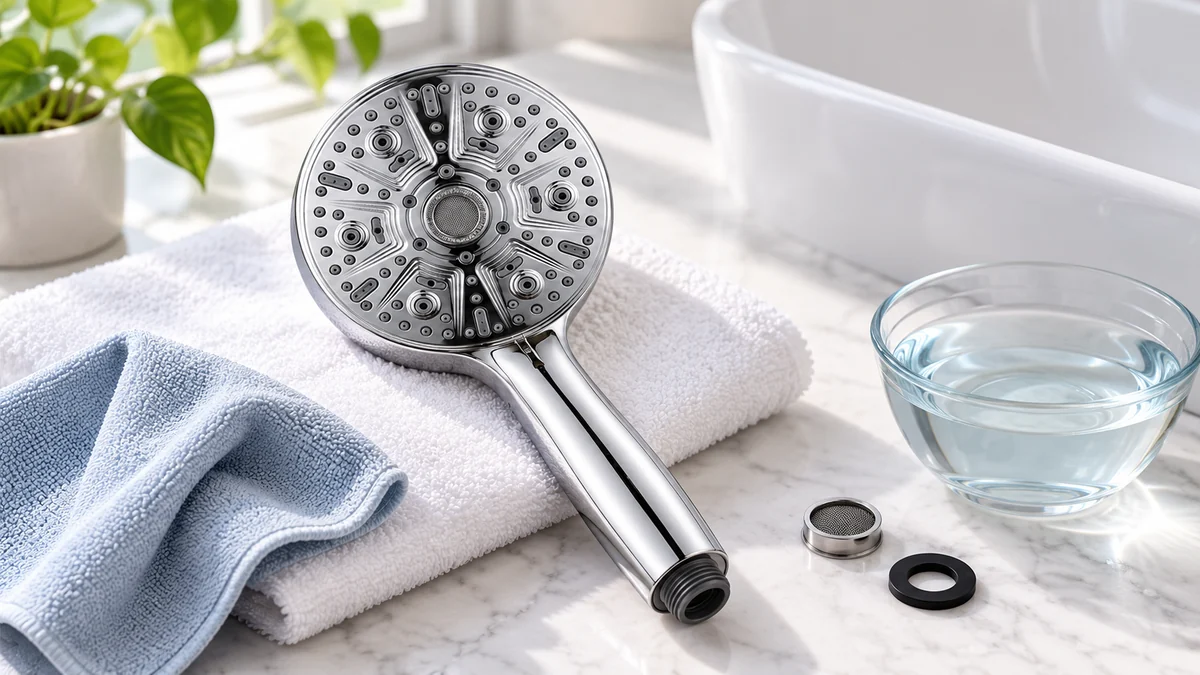
Clean a microbubble shower head by first turning off the water, checking the inlet screen and spray outlets, and following the model-specific instructions for deposit removal. Use gentle methods compatible with the finish and seals. Do not insert hard objects into precision outlets, use strong corrosive cleaners, or dismantle components that the manual does not identify as user-serviceable.
Signs that maintenance is due
Uneven jets, lower flow, spray changing direction, visible deposits, stiff mode switching, or leakage at a joint are reasons to inspect the shower head. They are maintenance symptoms, not proof of a health hazard.
The required frequency depends on water hardness, suspended particles, temperature, usage, and whether an upstream filter is present.
Routine cleaning steps
- Turn off the water and disconnect the head if the manual permits.
- Inspect the hose connection, washer, and inlet screen.
- Rinse loose debris from removable screens.
- Wipe external surfaces with a soft cloth.
- Clean spray outlets only by the method recommended for the model.
- Reassemble seals in their original positions.
- Run water and check flow and leakage.
For deposits, use only a concentration and soak time compatible with the product materials. The GXZR-008 faucet-generator instructions describe a vinegar and warm-water method for that model; it should not automatically be copied to every plated shower head.
What to avoid
- Strong acids, alkalis, bleach, or abrasive powders unless specifically approved
- Metal picks that enlarge or scratch outlets
- Excessive force on mode selectors and threaded joints
- Mixing cleaners
- Reassembling damaged washers or seals
Aggressive cleaning can damage plating, plastics, seals, and precision water passages. When damage is visible, replacement of the affected part is usually safer than stronger cleaning.
A simple maintenance record
| Date | Observed | Action | Result |
|---|---|---|---|
| Example | Two jets uneven | Screen and outlets inspected | Normal flow restored |
A short record helps households and distributors distinguish recurring water-quality issues from a product fault. It also gives support teams useful information when replacement parts are needed.
Evidence note
Product claims should be matched to the exact model, report, method, and operating conditions. Installation and results can vary with water pressure, water quality, maintenance, and local plumbing. This guide does not make medical claims.
FAQ
Common questions
How often should a shower head be cleaned?
Inspect it when flow changes or deposits are visible; a fixed interval depends on local water and use.
Can vinegar be used on every shower head?
No. Confirm compatibility with the finish, seals, plastics, and model instructions first.
Should the entire product be replaced when flow drops?
Not immediately. First check pressure, hose condition, screens, deposits, adapters, washers, and the selected spray mode.
Product inquiry
Need model-specific specifications or compatibility help?
Tell us your market, connection, pressure range, expected quantity, and customization needs.
Request product information