
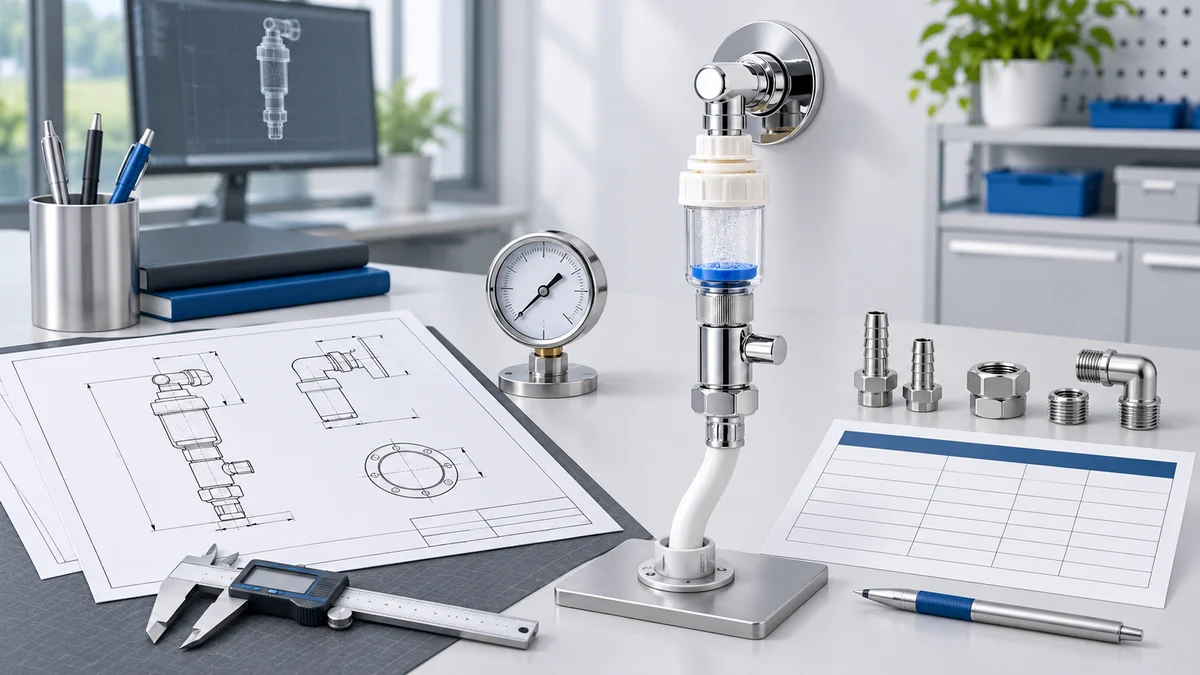
A useful microbubble generator specification identifies the exact model, intended liquid and gas, operating pressure, delivered flow, connection standard, wetted materials, temperature range, pressure loss, bubble measurement, concentration basis, power or gas requirements, maintenance, and warranty. A single bubble-size number is not a complete specification.
Start with the application envelope
State whether the generator is for a shower, faucet, laundry inlet, recirculation tank, aquaculture line, or another system. The duty cycle, water quality, target flow, available pressure, space, and regulatory requirements define whether a model is suitable.
Request measurable operating data
| Specification | Minimum detail |
|---|---|
| Flow | Range and tested operating point |
| Pressure | Inlet range and pressure loss |
| Connections | Standard, size, gender, seal |
| Materials | All wetted parts |
| Bubble result | Method, distribution, concentration, conditions |
| Service | Cleaning, parts, interval, symptoms |
Read bubble data in context
Use ISO 20480-1:2017 for terminology. Ask whether the measurement is number- or volume-weighted, where the sample was collected, how soon it was tested, how many repeats were run, and whether inlet water was measured.
A laboratory generator test does not automatically describe a final faucet or shower assembly.
Include commercial support in the comparison
For OEM procurement, request drawings, sample lead time, MOQ, customization limits, packaging, spare parts, warranty handling, inspection criteria, and change-control procedures. Unknown support costs can outweigh a small unit-price difference.
Evidence boundary
This guide separates terminology and practical selection from unverified outcomes. Conclusions must match the exact model, method, operating conditions, sampling procedure, controls, report scope, and target market. It does not make medical claims.
FAQ
Common questions
What is the most important specification?
There is no single one; suitability depends on the operating envelope and the claim being evaluated.
Is D50 enough to compare two generators?
No. Weighting, concentration, method, conditions, and distribution also matter.
Should I request a sample?
Yes. Test the final configuration under conditions relevant to the target market before scaling.
Product inquiry
Need model-specific specifications or OEM support?
Tell us your application, market, connection, pressure, flow, quantity, and evidence requirements.
Request product information